


Balanced Audio Explained
Posted: 13 July 2010
Synopsis: Balanced audio cables can transfer an audio signal while canceling out noise and interference picked up along the length of the cable, providing they are connected to balanced inputs and outputs.

Balanced audio cables can transfer an audio signal while canceling out noise and interference picked up along the length of the cable, providing they are connected to balanced inputs and outputs. Balanced cables will have XLR or 1/4" TRS connectors, while cables with RCA or 1/4" TS (mono) plugs are always unbalanced.
Difference between Balanced and Unbalanced?
A balanced XLR cable consists of at least two conductors / wires that are twisted around each other. The twisting ensures any interference from a particular side of the cable is dispersed over both conductors evenly. A third outer conductor carries the ground signal and also shields the cable. They can carry either a microphone level signal (Low-Z) or a line level (balanced line) signal.
An unbalanced cable has one conductor to carry the main signal and an outer ground / shield conductor, and there is no cancellation of noise possible. Instrument cables and RCA cables are both types of unbalanced cables. An instrument cable carries a Hi-Z signal, while an RCA carries a line level signal.
Why use a balanced audio?
Electrical and radio interference (EMI and RFI) is everywhere, and it becomes most noticeable when there's a lot of electrical equipment and power cables around. Mic level signals are also very weak (in comparison to unbalanced guitar signals) making any noise picked up more noticeable. The longer the cable, the more susceptible it is the picking up noise also.
Microphones will typically always have 3pin outputs plugs requiring a balanced XLR cable. Sound equipment such as mixing desks and PA speakers have line inputs and outputs that are used to connect and mix different audio devices. Line level in and outs are can come in XLR to the 1/4" / TRS plug types. The 1/4" plug has two types, the Mono/TS type found on guitar cables, and the Stereo/TRS type that has an contact inside and noticeably an extra black insulation ring on the tip, enabling a balanced audio cable to be connected. XLR to 1/4" TRS cables are common when patching different equipment together and ensure a balanced connection just as XLR to XLR connectors do.
How does interference get canceled out?
When electrical energy is transferred, it will always give off excess energy into the air, which is in turn picked up by other electrical circuits, particularly cables, as they are essentially a very long distance circuit.
The shielding on cables does to help negate the pickup of renegade electricity, but does not stop it completely, so fancy audio technicians came up with balanced audio.
When a balanced signal starts its life in your microphone or mixing desk or wherever it might have been born, it consists of two identical signals being sent in parallel. The jack on your mic or mixer then inverts one of these signals before sending it down the two separate conductors of your XLR or TRS cable.
What does it mean to invert a signal?
Think of a signal as a waved line:
|
Notice there are troughs and peaks, which repeat in a cycle. This is very similar to how electrical energy works in a circuit. |
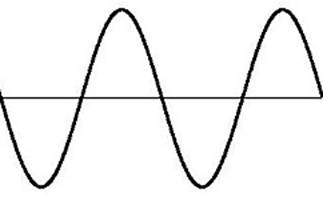 |
|
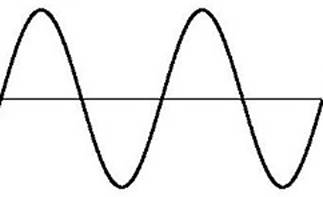
If the above is the original signal, our inverted signal would look like this: |
 |
|
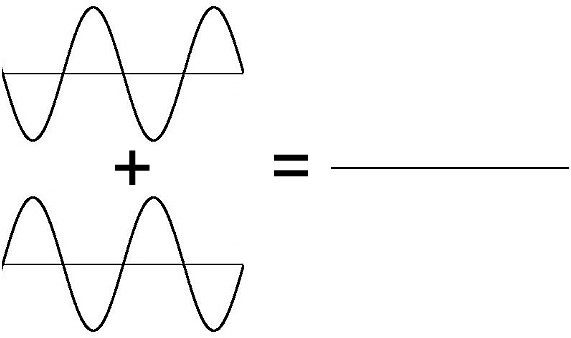
The inverted signal is doing the opposite thing from the original, but at the exact same time. If you were to combine both the inverted and original signals, they would cancel each other out perfectly as they are exact opposites, leaving no signal at all. |
 |
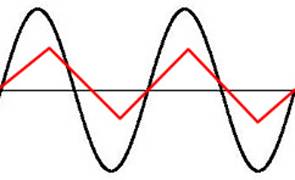
| Now, remember how we spoke about renegade electrical energy being picked up? Well, in our balanced cable, the same electrical hum is being picked up by both conductors (original and inverted). Think of the angry red line as our unwanted electrical noise. |  |
 |
|
Now here's the special part. When the balanced signal reaches its destination balanced jack at the other end of the cable, the inverted signal becomes reverted to the same as the original. Remember how we spoke about opposite signals cancelling each other out. Now the electrical noise of the reverted signal is now an inverse of the electrical noise of the original, and when the two signals are combined, the electrical noise cancels itself out; thus we have no electrical hum, like so: |
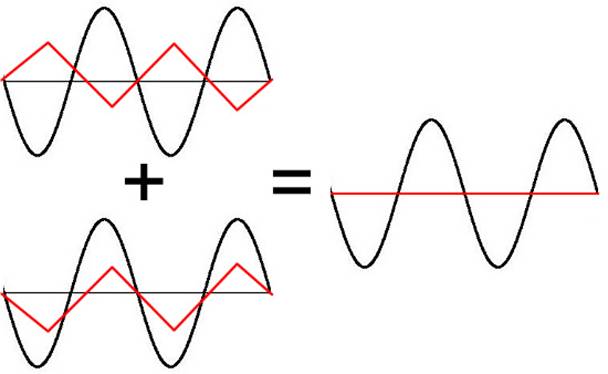 |
It is important to use balanced cables with microphones (low impedance especially) as they output such a low strength (voltage) signal which makes the signal very susceptible to electrical hum. This is even more important when using long microphone cable lengths. Balanced cables are also a good idea when there are many cables running near each other, especially power cables.
Line Level signal outputs and inputs can often be balanced on professional audio equipment such as mixing desks. It is less important to use balanced cables for line level signals, having a higher strength signal means they are less susceptible to electrical hum. Though again, for longer lengths and when around there are many other cables around, using a balanced XLR or TRS cable is a good idea.


 In Stock