


























Understanding Signal Flow in Audio Systems
Author: SWAMP Industries
Posted: 6 September 2026
Synopsis: Trace the audio path from source to speaker: signal types, gain staging, and what happens inside the mixing desk. Lesson 1 of the SWAMP audio production course.
Lesson 1 of 7
Back to course overviewLessons in this course
The Audio Signal Chain, Start to Finish
Signal flow is the path an audio signal takes from its source to your ears: an instrument or microphone feeding a preamp or DI box, through the mixer's gain, EQ and effects, then out to amplifiers and speakers. Once you can trace that path, every audio system starts to make sense, from a bedroom recording setup to a festival PA. This first lesson of the SWAMP audio production course covers the signal types you will meet, what happens inside a mixing desk, and the components that shape your sound along the way.

The signal chain at a glance
Every system you will ever plug into follows the same basic sequence:
- Source - a microphone, guitar pickup or keyboard generates the signal.
- Preamp or DI box - weak mic and instrument signals are boosted, balanced or converted to a usable level.
- Mixer channel - gain staging, EQ and inserts shape each source individually.
- Mix bus - the channels combine into the main mix, controlled by the master fader.
- Amplification - the line level mix is boosted to speaker level.
- Speakers - FOH speakers, stage monitors or studio monitors turn it back into sound.
The rest of this lesson unpacks each of those stages.
What is Signal Flow?
In audio systems, traditional instruments and microphones produce analogue signals, which are low-voltage signals requiring amplification to be properly processed and heard. These analogue signals travel through audio cables to inputs on devices like mixing desks, which amplify and modify the signal for output. Analogue signal flow is especially important for managing and preserving sound quality through each stage, from the instrument to the final output. In contrast, digital devices like electronic keyboards typically output a line level signal that is stronger (higher signal voltage) and requires fewer stages in the signal flow.
Signal Types: Hi-Z, Mic Level, and Line Level
-
Hi-Z (High Impedance)
"Hi-Z" stands for high impedance, typically referring to instrument signals like electric guitars or basses. A passive guitar pickup puts out a high-impedance signal (around 10k ohms) that expects to see a very high input impedance at the other end (around 1M ohms). Plug it into a dedicated Hi-Z instrument input, or use a DI box feeding a microphone preamp, to match the impedance and create the signal strength needed for further processing without losing tone or detail.
-
Mic Level (Low Impedance)
Microphone signals are known as "mic level" and are typically classified as low impedance, or "Low Z". Mic level signals often have impedance values between 150 and 600 ohms and produce very low voltage levels. To be usable within a mixing console, these signals require significant amplification, provided by a preamp, which boosts them to line level, making them suitable for further processing in audio systems.
-
Line Level
Line level signals are standard within audio equipment, allowing sound to be routed and mixed without further amplification. There are two types of line level signals: consumer (-10 dBV) and professional (+4 dBu). Consumer line level signals operate around 0.316 volts, with typical impedance values of 10k ohms, while professional line level signals are stronger at around 1.23 volts and usually have lower impedance values of 600 ohms, facilitating compatibility with pro audio equipment.
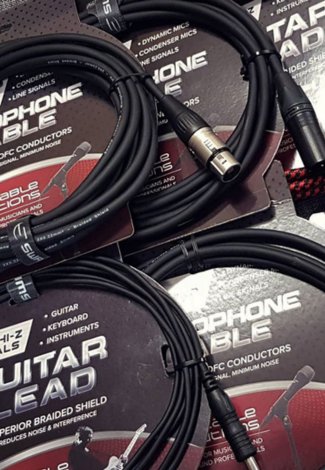
Each of these signal types travels on its own family of cables and connectors. Our guide Cables, Connectors and Analog Audio Signal Types Explained maps the whole range in detail.
Mixing Desk: Central Hub of Audio Signals
A mixing desk is the central component for managing audio signal flow. Mixers vary in the number of input channels they provide, but all follow a consistent structure where each channel processes the signal from top to bottom. Typically, inputs are located at the top, allowing analogue audio signals to enter the channel. Signals then pass through various stages, including the preamp (for mic signals), an insert routing point (used for integrating external effects), an EQ section, and auxiliary channels for additional routing options. Finally, signals flow to the main mixer bus fader, where they can be controlled as part of the overall mix before being sent to the output. Understanding the stages within each channel helps with efficient signal management and sound control across the mixer.
How Hi-Z Inputs and DI Boxes Handle Instrument Signals
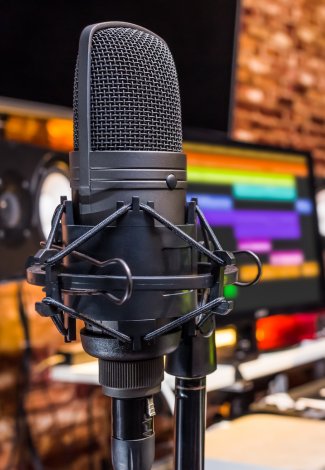
Hi-Z inputs on mixers or DI boxes are often used for instruments like acoustic guitars, where the raw signal represents the desired sound. Hi-Z inputs allow these high-impedance signals to be amplified or converted for further processing without the tonal colouration introduced by a guitar amplifier. For electric guitars, however, a Hi-Z input or DI box is typically bypassed, as the guitar's sound is shaped through the character of the amplifier and speaker setup. To capture this sound in an audio system, a microphone is placed in front of the guitar amp's speaker, preserving the unique tone produced by the amplifier and feeding it into the mixing desk as a mic level signal.
Output to Amplifiers and Speakers
After the audio signal has been processed and mixed within the mixing desk, it is available at the output stage, typically at line level. At this point, the signal can be routed to external power amplifiers or directly to powered speakers in live sound setups, such as PA (public address) systems or stage monitors. The external amplifier or powered speaker then boosts the line level signal to the necessary volume for the audience or performer to hear clearly. Properly managing this final stage ensures that the sound remains balanced, powerful, and faithful to the original audio sources.
Signal Path Components and Their Roles
Each component in the audio signal path helps shape and preserve sound quality. A fundamental principle in signal management is gain staging, which involves setting appropriate levels at each stage to prevent noise and distortion. Preamps, for example, amplify weak mic level signals to line level, providing a clean, usable signal for further processing. Other components, like equalisers (EQs) and compressors, refine the tone and dynamics of the signal, allowing audio engineers to tailor the sound for different environments or tonal characteristics.
Amplifiers are the final stage in the signal path, boosting the line level signal to a speaker level signal that can drive PA systems, stage monitors, or studio monitors. Together, these components work in sequence to create a clear, balanced, and controlled audio output, whether in a live or recorded setting.
Summary
Understanding signal flow is essential for ensuring optimal sound quality in audio systems. From the initial amplification of low-voltage signals from analogue instruments to managing impedance, shaping the sound with EQs and compressors, and boosting signals for final output, each stage is crucial. Effective routing and level management allow for greater control, clarity, and versatility in both live and recorded sound environments, helping to deliver audio that remains true to its original sources.
Continue the course
- Next lesson: Basic Audio Connections and Setups
- Course overview: Audio Production Course
The mixing desk sits at the centre of every signal chain covered in this course. Browse the full range of Mixing Desks at SWAMP.